Pay Now

The Right Way to Brush and Floss with Braces for Better Oral Health
Blog Summary
“This blog covers the best ways to brush and floss while wearing braces. You’ll learn why oral hygiene is more important during orthodontic treatment, step-by-step brushing and flossing techniques, tools that make cleaning easier, and common mistakes to avoid. By the end, you’ll have practical tips for keeping your teeth and braces clean, healthy, and free from problems. We’ll also guide patients in Elkhart, IN, on where to get expert orthodontic care and personalized hygiene tips.”
Why Oral Hygiene Matters More with Braces
Wearing braces is a big step toward achieving a straighter, healthier smile. However, braces create extra spaces where food particles and plaque can get trapped, making it harder to keep teeth clean. According to the Centers for Disease Control and Prevention (CDC), poor oral hygiene can lead to cavities, gum disease, and staining—issues that are more likely if teeth are not cleaned properly during orthodontic treatment.
For patients in Elkhart, IN, mastering proper brushing and flossing techniques with braces ensures your treatment stays on track and your smile remains healthy throughout the process.
Brushing with Braces: Step-by-Step Guide
Brushing your teeth with braces may take more time and care than brushing without them, but it’s one of the most important steps to keep your smile healthy during orthodontic treatment. Braces create extra spaces where food and plaque can hide, so proper brushing is essential to prevent cavities, gum disease, and white spots on the teeth. Here’s a step-by-step guide to help you brush effectively with braces:
Choose the Right Toothbrush
Not all toothbrushes are equally effective for braces. A soft-bristled toothbrush is gentle on your teeth and gums, while still being strong enough to remove plaque. Many orthodontists also recommend using a special orthodontic toothbrush with a V-shaped bristle design. This shape makes it easier to clean around the brackets and wires. For even better results, an electric toothbrush with a small, round head can provide a deeper clean in tight spaces.
Brush at an Angle
When wearing braces, brushing straight across won’t remove all the plaque. Instead, hold your toothbrush at a 45-degree angle and carefully clean above and below the brackets. This technique ensures that you reach the areas where plaque tends to collect the most, especially around the metal parts of your braces.
Use Gentle Circular Motions
Scrubbing back and forth too hard can damage your braces and irritate your gums. Instead, use gentle, circular motions while brushing. Take your time—spend at least two minutes making sure you cover all areas:
- The front surfaces of your teeth (around the brackets)
- The back surfaces (where food often sticks)
- The chewing surfaces (which can trap plaque and food particles)
Don’t Forget the Gumline
Braces can make it harder to reach your gums, but cleaning along the gumline is just as important as cleaning your teeth. Gently angle your toothbrush toward your gums and brush in small, circular motions. This helps remove food particles and bacteria that cause swollen or bleeding gums (gingivitis), a common issue for patients with braces.
Brush After Every Meal
One of the biggest challenges with braces is that food can easily get stuck in wires and brackets. If left uncleaned, this leads to bad breath, stains, and plaque buildup. To avoid this, try to brush after every meal or snack. If you can’t brush right away, at least rinse with water or a fluoride mouthwash to help wash away food particles until you can brush properly.
Have you wondered which toothpaste works best with braces? Check out our tips from an orthodontist to choose the right one.
Flossing with Braces: The Right Way
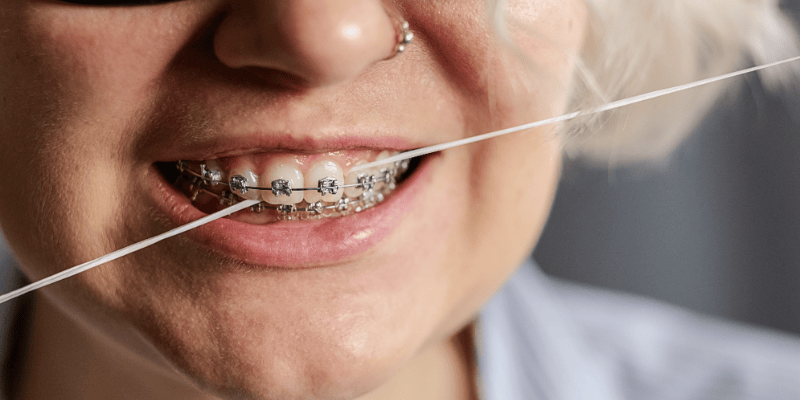
Flossing may feel tricky with braces, but it’s just as important as brushing. Here are effective methods:
Use Floss Threaders
These small tools guide the floss under wires, making it easier to clean between teeth.
Try Orthodontic Floss or Super Floss
Special floss designed for braces has a stiff end to slide under wires, a spongy section to clean around brackets, and regular floss for between teeth.
Move Gently
Curve the floss in a “C” shape around each tooth and slide it up and down to remove plaque. Avoid snapping the floss against the gums.
Consider Water Flossers
A water flosser can be a helpful addition to your routine, using a stream of water to wash away debris and plaque from hard-to-reach spots.
Helpful Tools for Better Cleaning
Using the right tools can make brushing and flossing with braces much easier:
Interdental Brushes (Proxabrushes): Great for cleaning between brackets and wires.
Fluoride Toothpaste and Rinses: Protect teeth from cavities while strengthening enamel.
Orthodontic Wax: Protects gums from irritation while you clean.
Love this place. Dr Burns fixed my teeth as well as my son’s and now we are taking my daughter for her braces. Dr and the staff are friendly, attentive and knowledgeable. They are very good at what they do.
As a person, I am aware that he is very compassionate and donates his time and money for worthy causes. So glad we have Dr Burns for our orthodontic needs. – Patnuk1
See why families rely on us for their dental care, read our glowing Google reviews and hear directly from our happy patients.
Common Mistakes to Avoid
Even with good intentions, some mistakes can make oral care less effective:
Brushing too hard – Can damage enamel and irritate gums.
Skipping flossing – Leaves plaque between teeth, which can cause decay.
Not brushing long enough – Less than two minutes isn’t enough to fully clean braces.
Forgetting checkups – Regular orthodontic visits are essential for adjustments and monitoring oral health.
Why Consistency is Key
Brushing and flossing with braces may feel like extra work, but consistency is what makes treatment successful. Good oral hygiene prevents white spots, cavities, and gum issues, ensuring that once your braces come off, your new smile looks as beautiful as possible.
Expert Guidance in Elkhart, IN

At Rick Burns Orthodontics, Dr. Rick Burns and his team are dedicated to helping patients not only straighten their teeth but also maintain excellent oral hygiene during treatment. We provide hands-on guidance, product recommendations, and personalized care to ensure your braces journey is smooth and successful.
If you want the best advice and care for brushing and flossing with braces in Elkhart, IN, contact Rick Burns Orthodontics today and take the next step toward a healthier, straighter smile.